
Detroit’s revival over the past decade has reshaped its identity from a symbol of decline into a center of cultural and architectural renewal. Once-dormant factories and vacant lots now host restored landmarks, creative workspaces, and a dynamic design scene unmatched in its ambition.
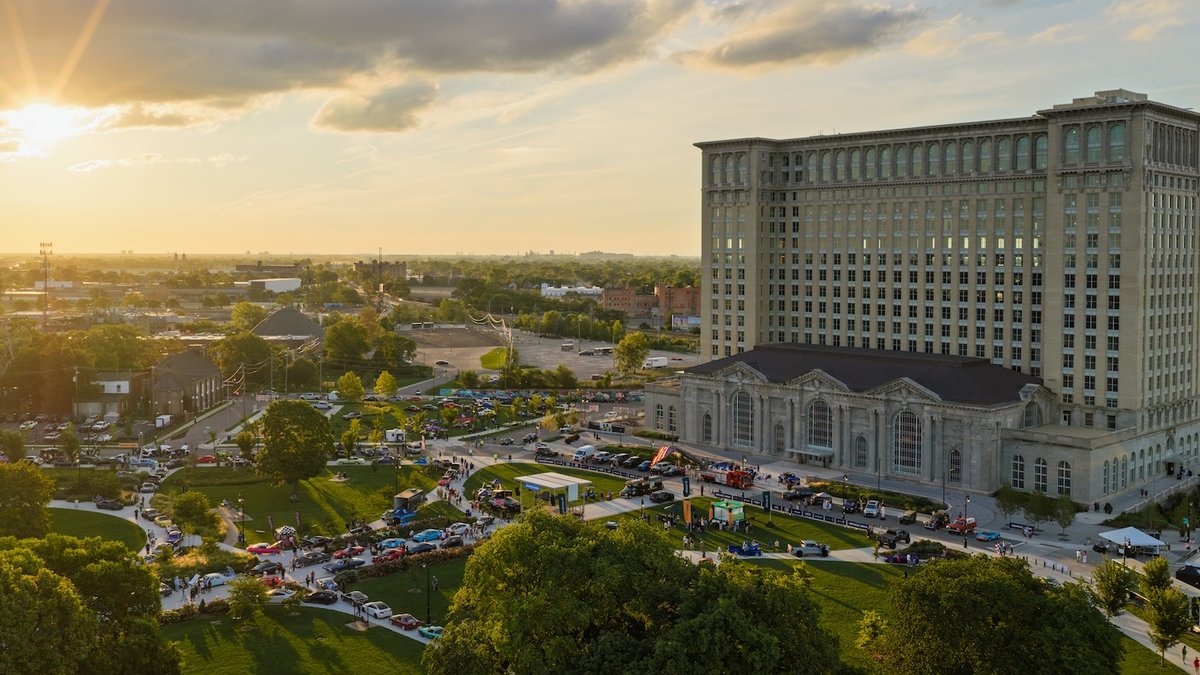
The most transformative example is Michigan Central Station, a historic structure that once embodied Detroit’s industrial decline. Acquired by Ford Motor Company in 2024, the station has undergone a meticulous restoration, featuring 29,000 Guastovino tiles on its ceiling—only 1,700 of which are reproductions. The main hall, designed by the architects behind New York’s Grand Central, now serves as a venue for DJ performances, classic car exhibitions, and public gatherings. The restoration even recovered lost architectural elements, with 3D printing used to recreate missing decorative details after a public appeal returned some original pieces.
Ford’s plans for the station extend beyond preservation. The company is converting the tower into an 180-room hotel operated by NoMad, while a restaurant by chef Matt Eckfeld and a library curated by local publisher Periodicals will become key features. Additionally, the city has partnered to develop the surrounding area into a multimodal transportation hub, though the station itself will not host train service.
Skyscrapers and green spaces redefine Detroit’s skyline
Nearby, the former J.L. Hudson Department Store site has been reimagined as Hudson Detroit, a five-fingered glass-and-steel tower designed by SHoP. The building now houses offices for General Motors and developer Rock Ventures, along with a striking Harry Bertoia sculpture in its atrium. At 71 stories, it stands as Detroit’s second-tallest structure and the first major development in 50 years. The courtyard incorporates native plantings, adding greenery to the urban environment.
Read Also: Spanish seed firm builds adaptive rural workspace
Despite these advancements, the city’s recovery has not been uniform. In neighborhoods like Little Village, abandoned properties remain, but community groups have transformed them into farms, gardens, and cultural spaces. Detroit now leads the nation in community farms per capita, with thriving plots in areas once considered blighted.
The Library Street Collective, led by Anthony and JJ Curis, has become a driving force in this revitalization. Beginning with a restored Romanesque church turned art gallery, the collective has since acquired and revitalized multiple properties across three east-side neighborhoods. Their latest projects include an OMA-designed cinderblock space for the recording studio Assemble Sound, a new home for the Louis / Buhl gallery (designed by the late Lorcan O’Herlihy), and the Stanton Yards marina redevelopment by SO – IL and Office of Strategy + Design.
Art installations turn empty lots into border dialogues
During Detroit Month of Design 2026, the collective hosted “Between Your Love and Mine”, an open-air installation exploring the Detroit-Windsor border. Curated by Stefan Novakovic, the project featured a warped grid of wooden columns by SOCA and a stage built from shipping pallets by Undecorated. The installation referenced Leonard Cohen’s “Treaty”, highlighting the border’s dual role as both a physical and contested divide. Its placement in a former empty lot, now a sculpture garden, showed how Detroit’s past and future intersect.
The border’s growing tensions have intensified with new bridge and port construction, making the divide more visible and politically charged. The installation’s design mirrored these shifts, with unstable terrain and warped structures reflecting the precarious nature of Detroit’s renewal.
Read Also: Experts Share Tips to Protect Pets in Heatwaves
Motown Museum revives music’s legacy with architectural flair
Music remains central to the city’s identity, as seen in the transformation of the Motown Museum. A tour led by Robin Terry revealed the museum’s design by Perkins & Will, featuring ceiling baffles shaped like vinyl grooves and ultra-glossy floors. The space preserves the original Hitsville U.S.A. recording studios, where artists like Marvin Gaye and Diana Ross worked. Terry, whose grandmother Esther Gordy Edwards founded the museum, called the project a bridge between history and the future.
The Cars at the Station event at Michigan Central Station showcased Detroit’s automotive heritage with rare and restored vehicles. The gathering celebrated the city’s legacy in manufacturing while highlighting its shift toward electric innovation. The event aligned with Ford’s broader efforts to repurpose the station as a cultural landmark, blending its industrial history with modern uses.
The Stanton Yards development, a collaboration between SO, IL and Office of Strategy + Design, transforms a former marina into a mixed-use complex. The project’s phased approach mirrors the collective’s strategy of revitalizing underused spaces. Meanwhile, Miss Lillie’s café, named for Berry Gordy’s longtime cook, remains a neighborhood staple, serving soul food classics that reflect Detroit’s musical roots.
The Motown Museum, set to open in June, will house archives founded by Esther Gordy Edwards, including rare recordings and memorabilia from Motown’s golden era. The Perkins & Will-designed building features vinyl-groove ceiling baffles and ultra-glossy floors, honoring the studio’s acoustic history. An raised walkway connects the new structure to Hitsville U.S.A., offering visitors a transition between eras. The museum’s free admission for residents ensures accessibility, aligning with efforts to keep Detroit’s cultural heritage inclusive.


