
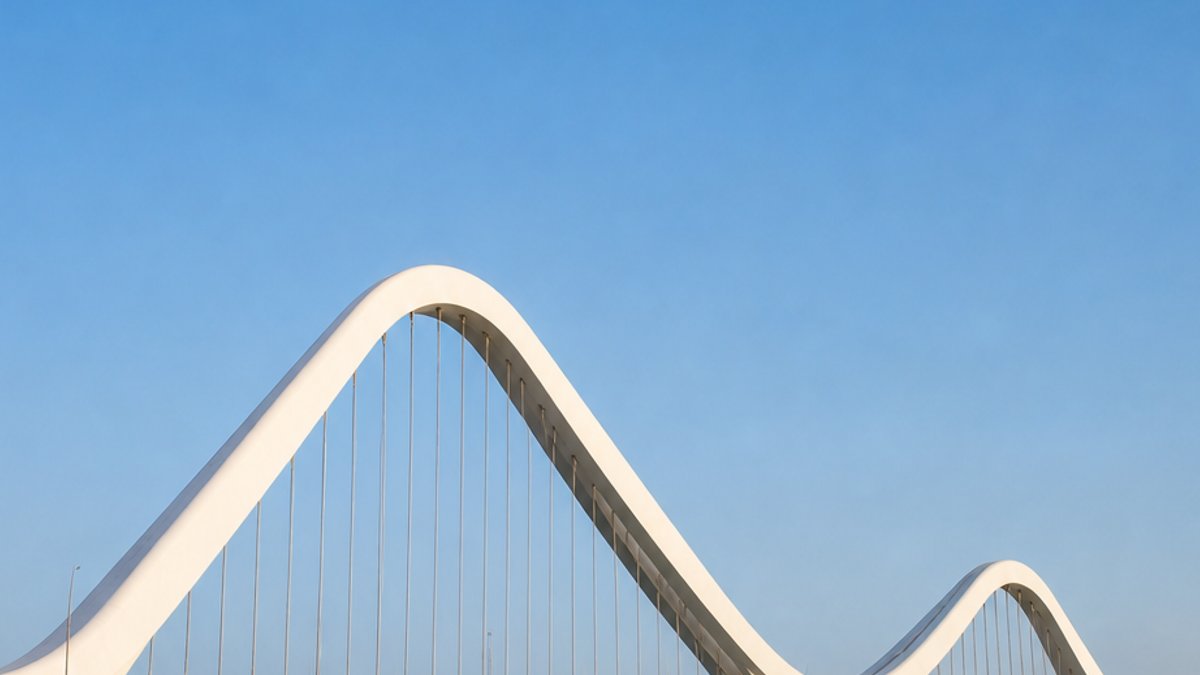
Abu Dhabi’s four signature bridges, the Al Maqta, Sheikh Zayed, Al Mafraq, and Al Qana, have been central to the emirate’s transformation. Each represents a distinct era of development, from basic connectivity to sophisticated urban planning. Their designs and functions reflect how infrastructure has evolved alongside Abu Dhabi’s economic and social ambitions.
The Al Maqta Bridge, inaugurated in 1968, marked Abu Dhabi’s first permanent road connection between the island and mainland. Prior to its completion, ferries and temporary causeways carried the bulk of traffic. The bridge’s opening unlocked new possibilities, enabling the free movement of goods and people. This shift was critical for early commercial and residential zones, which might otherwise have remained physically isolated from the rest of the emirate.
When the Al Mafraq Bridge was constructed, the need for expanded connectivity had grown significantly. The project targeted industrial districts and inland areas, addressing logistical challenges for a population that was rapidly increasing. By linking remote regions to the capital’s economic center, it strengthened Abu Dhabi’s position as a regional commercial powerhouse. The bridge’s strategic placement ensured that resources and labor could flow efficiently to where they were needed most.
Read Also: Dubai restricts shared housing to specific zones
The Sheikh Zayed Bridge, completed in 2010, broke from earlier designs by blending functionality with architectural ambition. Its distinctive undulating form was not merely symbolic but engineered to accommodate surging traffic from major projects like Yas Island and Saadiyat Island. The bridge’s capacity showed Abu Dhabi’s transition to large-scale urban planning, where infrastructure had to support cultural, residential, and commercial spaces in tandem.
Unlike its predecessors, which prioritized trade and industry, the Al Qana Bridge aligns with Abu Dhabi’s broader goal of lifestyle diversification. It serves as a vital link between residential neighborhoods and leisure destinations, including waterfronts, cultural sites, and entertainment zones. This ensures seamless access for both locals and visitors, demonstrating how modern infrastructure now addresses both economic and social priorities.


