
The RHS Badminton Flower Show took place from 8 to 12 July 2026, at the Badminton Estate in Gloucestershire, replacing this year’s RHS Hampton Court Palace, which has become a biennial show. This new show featured a host of exciting gardens and plants for its visitors.
The show included various designer show gardens, floral displays, and expert talks. One of the highlights was the largest ever RHS feature garden, which was designed by Tom Stuart-Smith and sponsored by singer Will Young and plantsman and TV presenter Jamie Butterworth.
Show Gardens at RHS Badminton Flower Show 2026
The Perfume Pavilions garden, designed by Nicholsons Garden Design, featured a host of fragranced plants, including lavender, honeysuckle, daphne, and phlox. Two greenhouses showcased scented foliage plants, such as geraniums.
The Archers 75th Anniversary Garden, designed by Jo Thompson, celebrated the 75th anniversary of BBC 4’s long-running radio drama. The garden gave visitors the sense that they were peeking into the front garden of Ambridge’s fictional Bridge Farm, with features such as Pat’s strawberries for jam-making and Tony’s packets of sweet pea seeds.
Tribute Gardens Unveiled
The Julia Rausing Garden, designed by Tom Stuart-Smith, was the largest ever Feature Garden to be seen in any RHS show, measuring 2,400 square meters in size. The garden paid tribute to Julia Rausing, a British philanthropist and garden lover who helped raise over £400 million for good causes throughout her life.
Another notable garden was Finding Hope, designed by Rick Ford and Pip Probert, which highlighted the work of the suicide prevention charity CALM. The garden was structured around 16 squares to represent the number of lives lost to suicide every day and featured natural materials and a restrained planting palette for a calming and gentle feel.
Read Also: UK gardens sought for new wildlife documentary series
The Macmillan Cancer Support: The Nascent Shade Garden, designed by Elle Arnett, emphasized the power of legacy giving and took inspiration from the proverb: ‘A society grows strong when its people plant trees in whose shade they know they shall never sit’. The garden featured sculptural birch trees and lime and stone sculptures.
In comparison to other garden shows, the RHS Badminton Flower Show stood out for its unique blend of traditional and modern garden designs, showcasing the diversity and creativity of the gardening community. The show’s focus on sustainability and environmental innovation was also noteworthy, with many gardens incorporating eco-friendly features and materials.
International Garden Inspirations
The Oregon – The Productive Garden, designed by Sadie May Stowell, captured the defining elements of Oregon’s Willamette Valley in the US, with features such as flowing water, fruit trees, and pollinator-friendly planting. The garden featured a predominantly blue, white, and pale yellow planting scheme, with key plants including lupins, lavender, and sunflowers.
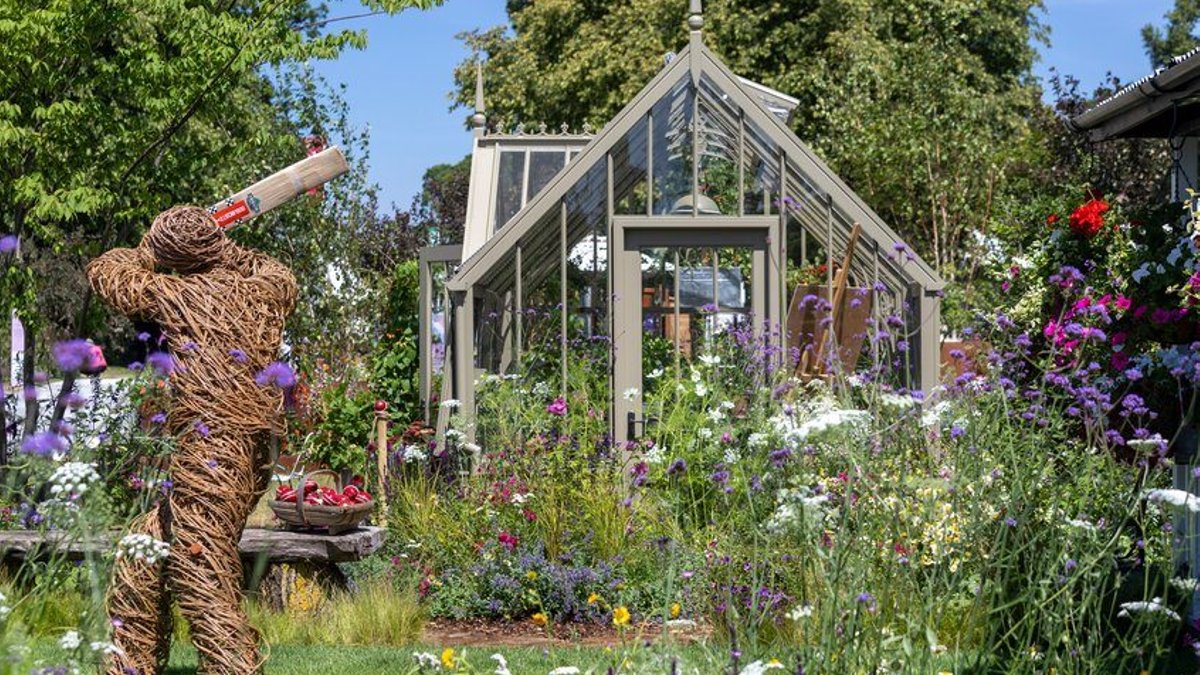
The Cricket Pavilion Garden, designed by Stephen Moody, celebrated over 150 years of English cricket bat manufacturing in East Sussex. The garden combined a traditional cricket pavilion and a neatly clipped lawn with colorful planting, giving a nod to the cricket ground at Old Heathfield, East Sussex.
A Space For Her, designed by Sophie Sturgeon, was a garden designed for girls and young women to find support and confidence away from societal pressures and social media. The garden featured thoughtful elements such as a sunken space for contemplation and a raised decking area for conversation, with a planting focus on whites and purples and wildlife-friendly species.
Blue Diamond Garden Centres: Where Grief Grows Quiet, designed by Sophie Leo, was a peaceful sanctuary for rest and reflection, inspired by ancient sheepfolds. The garden featured a planting scheme that took its cue from fields and hedgerows, with plants such as Acer campestre, native grass Deschampsia cespitosa, and wildflower ribwort plantain.
Read Also: Garden centres battle costly shoplifting epidemic
Silo: All that comes in remains, designed by Abigail Stoyle, was a ‘closed-loop’ space that showcased plants that were both edible and ornamental, with materials used sustainably, such as a concrete-alternative made from oyster shells. The garden was sponsored by Silo, the world’s first zero-waste restaurant.
Artisan Gardens Showcase
Electuary, designed by Joshua Fenton, was an Artisan Garden that drew on the designer’s experience as a beekeeper, incorporating natural materials and layered planting. The garden featured nods to traditional crafts such as wicker weaving, thatching, and hedge laying, with a focus on herbal remedies and native plants like hawthorn, dandelions, nettles, and borage.
Honing Heritage, designed by Nick Leitch, highlighted the importance of handmade crafts in historic garden design, with features such as a central iron gazebo and dry-stone walls. The garden paid homage to the Arts and Crafts movement, with plants like Rosa Gertrude Jekyll and climate-resilient species such as Nepeta and Yucca glauca.
Ruskin Mill Trust – Artisan Woodland Craft Garden, designed by Rachael Austin, focused on the process of shaping natural materials into useful objects, with a central covered area featuring charred oak setts, hazel wattle fencing, and traditional ash furniture. The garden was sponsored by Ruskin Mill Trust, which offers therapeutic education and care for people with Special Educational Needs and Disabilities.
Celebrating Ancient Crafts
The Split Hazel Basketry Garden, designed by Henry T Pope, celebrated the ancient craft of split hazel basketry, with hazel trees showing signs of coppicing and a hazel hurdle fence. The garden featured a yellow, pink, and white planting scheme, with plants like verbascum, achillea, and alliums.
Other notable gardens at the show included A Celebration of Compost and Community, Buglife: Blue Halo Garden, Dorothy House: Shared Breath, Life in Dereliction, Living Beauty, Plantwild: The Pollinators Sanctuary Garden, Silverhand Estate: The Butterfly Garden, The Woodstock Homes Multiple Sclerosis Garden, The Yin and Yang Pocket Planting, University of Sheffield: The Invisible Balance Garden, and Urban Planters: A Pocket for Amphibians. Where Nature Grows, designed by Alison Johnston, was a Gold medal winner and Best Pocket Planting, sponsored by Four Seasons West Yorkshire in support of Canal and River Trust, and it featured a natural and serene design that showcased the beauty of nature.


