
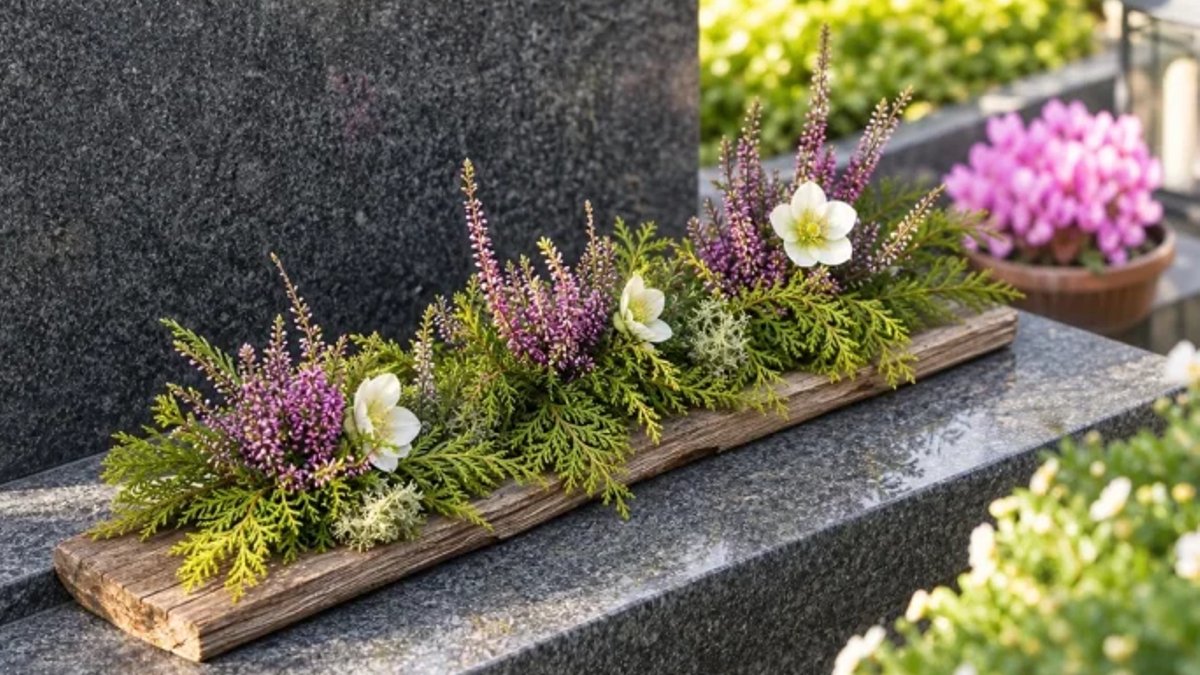
A piece of wood transforms the mood of a grave arrangement, offering a rustic alternative to uniform store-bought wreaths. A plain plank or curved tree bark strip provides a distinctive base that stands out in a row, allowing seasonal rebuilding with local flora. Muted natural tones in November, bright blooms in May, and evergreen boughs when everything else has gone brown create a dynamic yet simple design. The materials required are minimal, including a wood plank or bark, floral foam, a hot glue gun, and fresh or artificial stems.
What You Need for a Homemade Grave Arrangement
The supply list is straightforward. A wood plank or stable piece of tree bark serves as the foundation. Floral foam—either dry for faux stems or wet for fresh flowers—is essential. A hot glue gun, knife, and decorative elements like twigs, berries, or cones complete the setup. Most items are available at home improvement stores or craft aisles. Before starting, check cemetery regulations, as some prohibit non-standard decorations, especially before mowing season.
Read Also: Quick No-Sew Sock Gnome Craft in 20 Minutes
Building It on a Plank, Step by Step
Fix the foam to the board with hot glue. Use the glue sparingly, work slowly, and keep your fingers clear, hot-melt adhesive runs around 250°F and will burn you. Let the joint cool fully before you touch anything. Trim the foam to fit the plank, leaving a visible wood margin on all sides for a deliberate look. Begin with long greenery like arborvitae or cedar around the foam’s perimeter to establish a framework. Add flowers of varying sizes and colors, placing focal points strategically. Fill gaps with smaller blooms, cones, or dried seed heads, keeping the color palette limited to two or three tones for cohesion.
Soak wet floral foam by floating it on water and letting it sink on its own, pushing it under traps dry pockets in the middle. Cut stems at a sharp angle and insert once; pulling a stem out and reinserting it leaves a hole that won’t hold. Transport the finished piece in a shallow box or a plastic storage lid so nothing shifts on the drive over.
Tree Bark as the Natural Alternative
If you want something more organic, swap the plank for a strong piece of tree bark. The irregular surface and deep ridges make every arrangement unique, no two slabs curve the same way. Fallen birch, pine, or cottonwood bark all work, and after a windstorm, there’s usually plenty lying around. Glue the foam to a flat, stable spot on the inside of the bark, then arrange greenery, flowers, and accents as you would on the board. The result is a rustic grave decoration that pairs well with dried grasses, cones, and other natural materials. Ensure the piece won’t rock; if the bark wobbles, shave a little off the high points underneath or add a second small glue pad.
Read Also: Wide-Leg Lyocell Jeans Ideal for Hot Weather
Choosing Fresh or Artificial Materials
Fresh flowers and greenery look alive, and nothing artificial quite captures the way light moves through real petals. For cut stems, use wet foam soaked ahead of time. Artificial flowers, on the other hand, require no maintenance and stay presentable for weeks. Either way, how long the piece lasts depends on where the grave sits, how much sun and wind it gets, and what materials you built it from. A reasonable compromise: a faux base of evergreen and berries that carries the structure, with two or three fresh stems tucked in that you refresh on each visit.
A plain plank or a slab of bark gives you the rustic foundation; flowers, greenery, and small accents do the rest.


