
More than 4 million UK homes now use air conditioning, a figure that has doubled in three years. Many households hesitate to install a system used only a few weeks annually, opting instead for a simpler method called window stacking.
How window stacking works
Window stacking layers different types of window coverings to block heat, control light, and improve comfort during hot weather. The approach prevents homes from overheating before outside air enters.
Anthony Threlfall, head of marketing at Everest, explains: “Window stacking is the method of layering different types of window coverings, usually around three. This is to create a combined system that blocks heat, controls light and improves comfort during hot weather.
“Rather than relying on a single blind or curtain, you build up a heat-blocking layer, a light-diffusing layer, and a heat-control layer that all work together.
“The result is far more effective than just a single covering on its own.
“Therefore, giving you much greater control over the temperature and airflow in a room throughout the day.”
To improve airflow, experts suggest opening two windows—one lower and one higher. Anton Neike, cooling and energy expert and CEO at Taupia, recommends starting with a ground-floor window on the cooler, shaded side of the home. Then, open an upper-floor window to release hot air. “Ideally you need two sets of openings, one lower down and one higher up.
“Start by opening a window on your ground floor, ideally on the cooler, shaded side of your home.
“Then, open a window on an upper floor (like a bedroom window or a roof window) to let the hot air escape.
Related: Garden rooms get better internet access
“For best results, open the bottom sash of your lower windows to let cool air in.
“Then, the top sash of your lower windows to let cool air in, and the top sash of your upper windows to let warm air out.
“If you have a two-storey home, opening first-floor windows on the windward side and second-floor windows on the opposite side works brilliantly.”
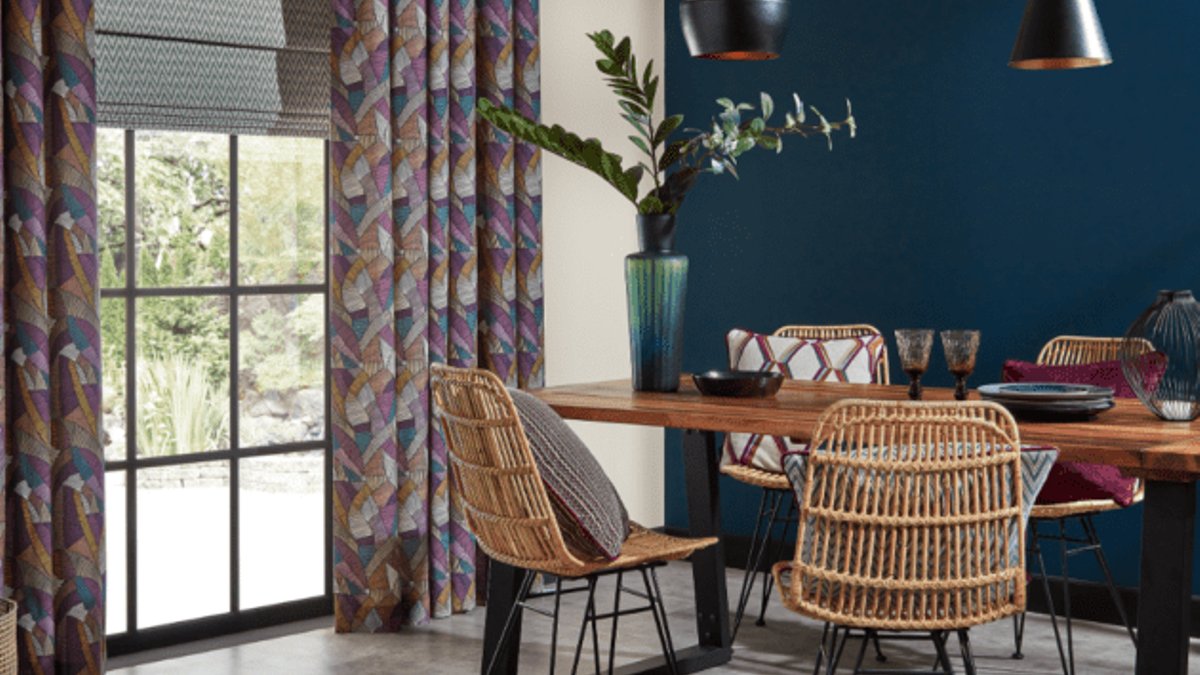
Debbie Leigh, design manager at interior textiles company ILIV, suggests a three-part setup: sheer fabric near the glass to soften sunlight, a thermal or blackout blind for the hottest hours, and adjustable curtains for evening insulation.
“The most effective window stacks are those that combine light-filtering and heat-blocking layers.
“Start with a sheer or voile fabric close to the glass which will help to diffuse strong sunlight but without completely blocking natural light.
“Next, add a well-fitted blind, such as a blackout or thermal roller blind, which can be pulled down during the hottest parts of the day.
“For the final layer use curtains, which you can adjust depending on the time of day.
“These will also add a layer of insulation when temperatures drop in the evening.”
Related: Inside the eerie manor where The Traitors Australia was filmed
The stack effect, where cooler air enters at the bottom and warmer air exits at the top, depends on timing. Outside air must be cooler than inside, so early mornings and late evenings are ideal. Midday openings let in heat instead.
Common mistakes and misconceptions
Opening windows during peak heat is a frequent error, raising indoor temperatures. Anton Neike explains: “The most common mistake is opening windows during the hottest part of the day.
“This lets hot air in and actually makes your home warmer.
“The stack effect only works when the air outside is cooler than the air inside, so it’s best used in the early morning and late evening after sunset.”
Another mistake is relying on fabrics that are too heavy. Debbie Leigh comments: “A common mistake is relying on heavy fabrics alone during hot weather, which can actually trap the heat rather than reflect or diffuse it.
“Over-layering can also reduce airflow around the window, making rooms feel stuffy if everything is kept closed all the time.
“On a similar note, you need to ensure the window dressings are layered in a flexible way as if they are too difficult to adjust it becomes harder to respond to changing temperatures throughout the day.”
Does it actually work?
Leigh said layered window treatments help ventilation when used carefully. “The important part is flexibility—being able to fully open curtains, raise blinds easily, and use windows when temperatures drop or breezes start,” she said.
For best results, shade windows during the day and ventilate at night. The method doesn’t match air conditioning, but for homes without it, the change can be clear.


