
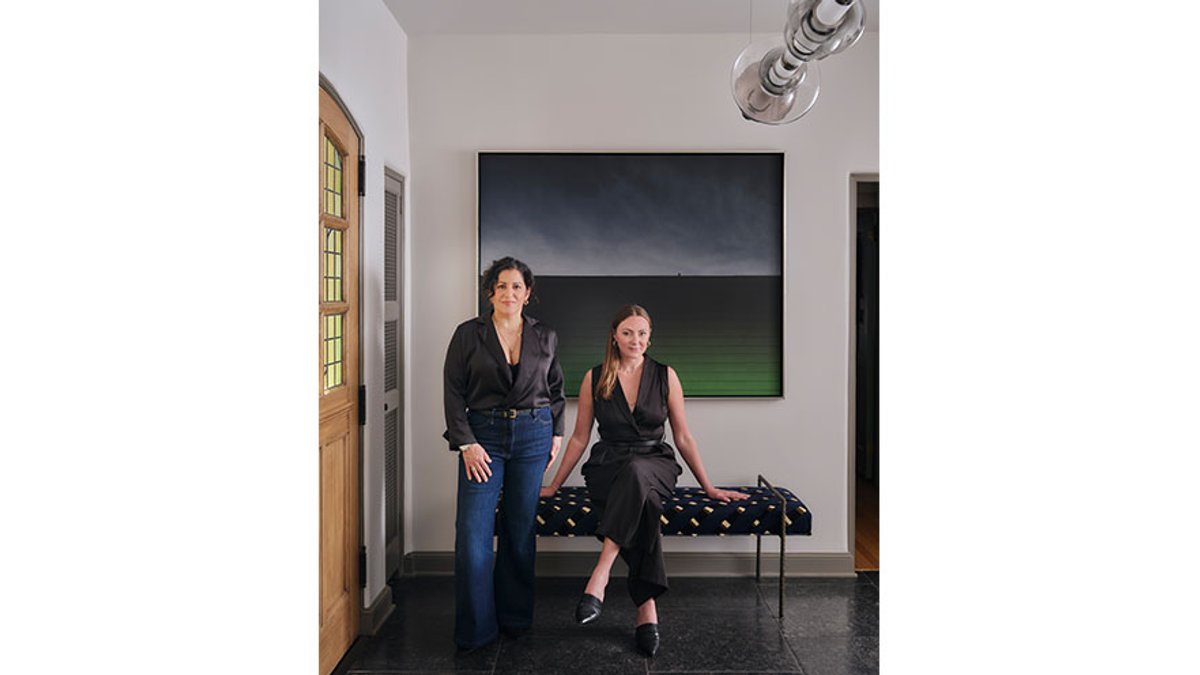
Designers often face the challenge of encouraging clients to make bold design choices, rather than playing it safe. In a recent podcast, co-founders of Pulp Design Studios, Beth Dotolo and Carolina Gentry, discussed their approach to guiding clients towards personalized design decisions.
Their conversation centered on understanding each client’s intentions for their home, whether it’s a forever residence or a short-term investment. By asking thoughtful questions, they aim to clarify the client’s goals and preferences, balancing creativity with practicality.
Beth and Carolina emphasize the importance of strategic communication, helping clients make smart choices that are both daring and sensible. They note the challenge of achieving innovative design without making the space overly eccentric or too tailored to an individual’s personality.
The goal is to create a space that is distinctive yet appealing enough for future buyers, should the client decide to sell. By keeping the design grounded in the client’s story, background, and experiences, the designers encourage clients to inject their personality into their homes.
This process often involves honest and direct conversations, with both Carolina and Beth being transparent about the risks and rewards of bold design. One key strategy they use is demystifying the vulnerability associated with personalizing a space.
The designers aim to create spaces that reflect their clients’ unique tastes and experiences, rather than conforming to mainstream aesthetics. They encourage clients to be fearless and authentic, rather than following trends or mimicking what everyone else is doing.
Specific examples illustrate how the designers guide clients through bold decisions, particularly in kitchen and bath projects. Beth recounts a recent kitchen project for a client who loves color and moody designs, where detailed renderings helped the client gain confidence in the dramatic jewel box design.
In bathroom projects, Beth and Carolina pushed clients to opt for bold choices, such as a striking floor in a Hawaii home, which became the centerpiece of the design. The casework and mirrors, inspired by surfboards, added to the dynamic yet refined atmosphere.
Building trust, open communication, and providing visual reassurance help clients move beyond safe choices. By focusing on authenticity and personal storytelling, the designers empower clients to make fearless, bold decisions that transform their homes into true reflections of their lives.
For instance, the designers’ approach can be seen in their use of interior design elements, such as color and texture, to create a unique and personalized space. This attention to detail helps clients feel more confident in their design choices, which is a key aspect of real-world skills that designers should possess.
The designers’ approach has practical applications in various design projects. By understanding the client’s goals and preferences, they can create a space that is both functional and aesthetically pleasing. This approach can be applied to different types of design projects, from kitchen and bath renovations to entire home makeovers.
In fact, the designers’ emphasis on authenticity and personal storytelling can be seen in their own work, such as their upcoming book, which includes a chapter on being brave enough to showcase one’s story in their living environment. This approach has resonated with their clients, who appreciate the designers’ ability to create spaces that reflect their unique personalities and experiences.
They are able to achieve this by considering the client’s lifestyle and preferences when designing a space, such as a smart home, which can be honored with awards for integration excellence.


