
The backyard has evolved beyond a simple patch of grass. It now serves as a space for dining, socializing, exercise, and relaxation, with research indicating its design can influence these activities.
A review published in Environmental Research, covering 143 studies, revealed that green spaces reduce cortisol levels, lower heart rates, and improve heart rate variability, a key stress marker. Another study from the University of Exeter found that individuals with private outdoor access experience greater well-being and are more likely to remain physically active.
From Overgrown to Optimized
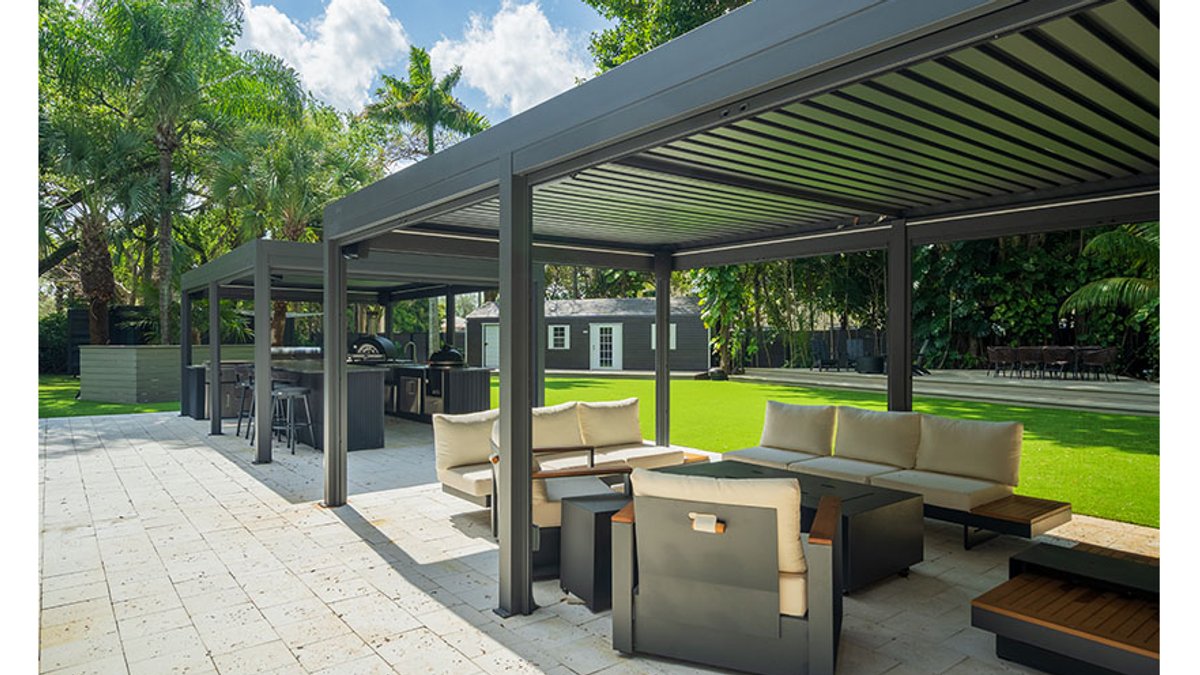
A Miami property called Health Haven demonstrates how intentional design can convert an unused yard into a wellness-focused area. The one-acre space, owned by performance coach Justin Roethlingshoefer and his wife Alyse, co-founders of the coaching business Own It, was redesigned from an overgrown lot into a fully equipped retreat.
The transformation includes an outdoor kitchen, two louvered pergolas with electronic shades, a sauna and cold plunge setup, a gym inside a repurposed shipping container, and a recovery studio featuring red light therapy and a hyperbaric chamber. Additional elements include a sound system for ambient relaxation, a dedicated yoga and breathwork area, a pool deck, and a fire pit for evening gatherings. Privacy is ensured with perimeter fencing and turf, creating a seamless outdoor environment.
Roethlingshoefer stated, “Environments change everything. They shape how you feel, the emotions you experience, and the memories you build.”
Simplicity as the Key to Use
The project was completed by RTA Outdoor Living, a firm that considers the backyard the most overlooked area in American homes. The obstacle, according to the company, isn’t lack of interest—it’s the difficulty of creating and maintaining such spaces.
Related: Houzz launches 2027 scholarship program
James King, RTA’s VP of design, explained, “If it’s complicated to build or inconvenient to use, people won’t keep it up. We focus on making outdoor spaces simple enough for daily use because that’s how the benefits accumulate. When cooking outside is effortless, families do it more. When a space is designed for gatherings, people host more often. These small changes add up over time.”
At Health Haven, the outdoor kitchen was built to minimize construction challenges. Instead of traditional masonry, RTA used a ready-to-assemble system with engineered concrete panels reinforced by composite rebar. The components were prefabricated offsite, allowing for precise coordination with the rest of the yard. The layout emphasized practicality, prioritizing cooking appliances, prep space, and storage over unnecessary features.
King emphasized the importance of planning for such a complex project. “The kitchen had to function as a central element without becoming the most difficult part to build.”
For homeowners accustomed to neglecting their backyards, the shift can be surprising. A space once seen as a maintenance burden becomes a natural extension of daily life, where meals, workouts, and relaxation occur without effort. The change lies not just in the additions but in how the design eliminates the mental hurdles that keep people inside. Gradually, these adjustments transform a neglected area into a daily destination.
The Roethlingshoefers’ property represents an ambitious example, but the concept applies to smaller yards as well. Even minor upgrades—like adding a fire pit, shaded seating, or a basic outdoor kitchen—can encourage similar behavioral shifts. Research confirms the advantages stem not just from the space itself but from how frequently it’s used.


