
The Hoxton hotel group is celebrating its 20th anniversary this year, having redefined hospitality since its first property opened in Shoreditch, London, in 2006. That launch introduced rooms priced at just £1, a rate that distinguished it from London’s corporate hotels, budget chains, and grand landmarks. The concept was straightforward: a space that blended high-end design with accessibility, ensuring it felt cool yet inclusive.
What started as a single property quickly grew. By 2011, The Hoxton had partnered with Ennismore, a hospitality company, and within a few years expanded to locations in Holborn, Amsterdam, Paris, and Williamsburg. Today, the brand operates 19 hotels across Rome, Chicago, Florence, Edinburgh, and Dublin, with the latter opening in 2025. Further openings in Madrid and Nashville signal continued global growth, though founder and Ennismore president Sharan Pasricha maintains a cautious pace. “The aim for The Hoxton has always been to create spaces with great design that feel accessible—not intimidating or exclusive, but somewhere people can genuinely feel comfortable,” he states.
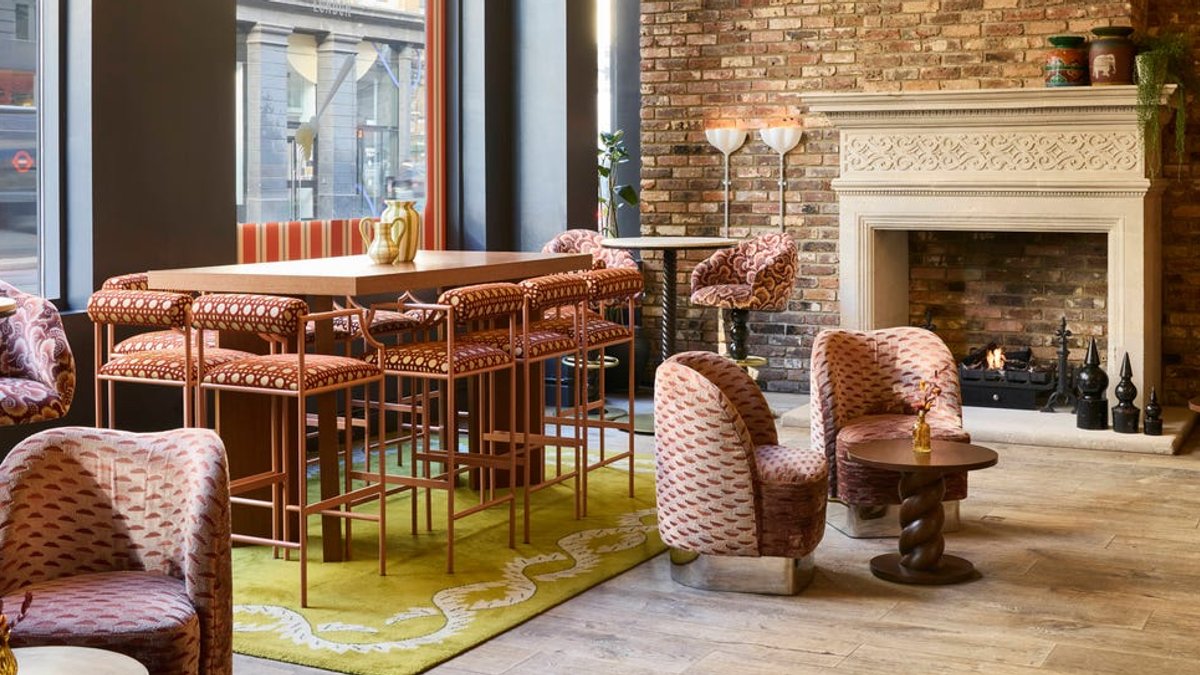
The brand’s signature open-house lobby remains a central element, functioning more like a lounge than a traditional reception area. Central bars, warm layered decor, and a mix of vintage mid-century and contemporary bespoke furniture define the space. Bedrooms extend this philosophy, featuring pendant lighting over beds and statement headboards tailored to each hotel. Materials are rich and textured, incorporating local art, plants, and layered decor. In the bedrooms, North explains, they always hang a pendant over the bed and avoid downlights as much as possible, to achieve that home-like effect, while a statement headboard has become something of a Hox signature, with each hotel having its own design.
Related Post: Abu Dhabi’s bridges shape its urban evolution
Local art and history shape each stay
This design approach extends beyond aesthetics, reflecting the surrounding environment. Each property integrates local artwork, neighborhood-inspired color palettes, and architectural nods to its history. A former telephone exchange in Shepherd’s Bush or a Georgian townhouse in Edinburgh becomes part of the hotel’s identity. The Hox Gallery, found in every location, showcases emerging artists from the area, curated with input from local galleries and creative organizations.
The balance between global consistency and local authenticity has driven The Hoxton’s success. While recognizable elements like the open lobby or the Hox burger remain, each hotel adapts to its city’s culture. “It brings together locals and guests in a way that feels natural,” Pasricha says. While he agrees there is a British sensibility to their approach, “it doesn’t take itself too seriously”, it’s one that translates easily to new territories.
Some guests have experienced the brand’s evolution firsthand. One writer stayed at the original Shoreditch hotel for her wedding night in 2008 and returned nearly 20 years later with her daughter. The experience remained unchanged: a space that feels both refined and unpretentious, welcoming families, travelers, and locals alike. Pasricha’s goal is to focus on evolving alongside guests, rather than remaining fixed to a single moment in time.
Read Also: Designers transform headboards into bold bedroom statements
20 years of evolution in Shoreditch
The original Shoreditch hotel, which opened in 2006, marked its 20th anniversary in 2026 with a full interior renovation and a series of milestone events. The redesign preserved the brand’s residential aesthetic while updating elements to reflect two decades of growth. Guests who stayed there in 2008 noted that the space now felt even more polished, though the fundamental philosophy remained intact. The revamp included new lighting, reupholstered vintage furniture, and an expanded Hox Gallery featuring artists who had emerged since the hotel’s launch.
Pasricha’s personal connection to the Shepherd’s Bush location, just minutes from his home, has shaped its identity over time. Unlike other properties, this hotel retains a strong link to its industrial past, with exposed brickwork and reclaimed materials in the lobby. The Hox burger, a menu staple since the brand’s early days, remains a favorite among staff and guests. North highlights Florence as his seasonal favorite, praising its outdoor terrace and the way the hotel blends Renaissance and Memphis Group design influences across its two distinct buildings. The 16th-century structure’s ornate details contrast with the bold geometric patterns of the 1980s addition, creating a layered visual experience that mirrors the city’s own historical contrasts.


