
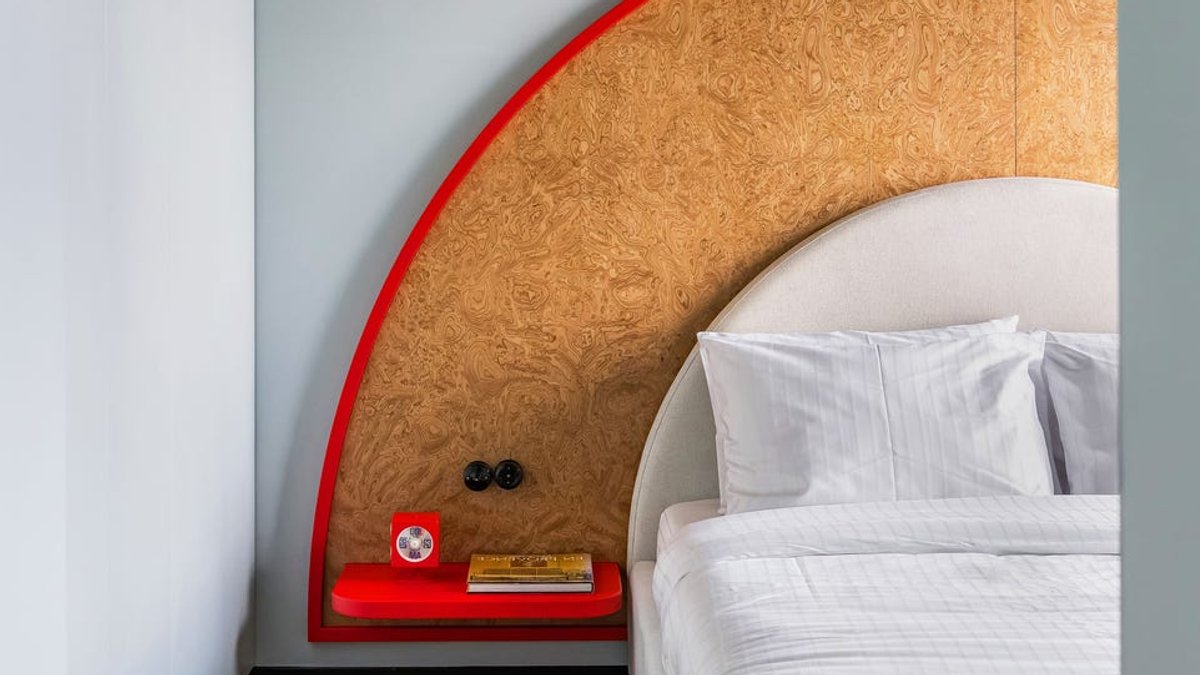
A headboard serves as more than just a functional piece—it acts as a defining element in bedroom design. The right choice can reshape a space by merging artistic expression with practical needs.
When the headboard becomes the room’s centerpiece
In a compact Bucharest loft, the headboard takes center stage, framing the bed like a sunburst. The design combines a slender vermilion-red frame with golden walnut burl, softened by grey velvet upholstery. This approach contrasts sharply with the exposed concrete ceiling and visible wiring, introducing warmth to the otherwise raw environment. Built on an MDF base, it also functions as a support for floating nightstands, reinforcing its structural purpose.
The decision hinged on proportions. Given the bedroom’s minimal footprint, the oversized headboard became the visual anchor. The walnut’s organic texture and the velvet’s muted tones stabilized the space, while the semicircular shape added a three-dimensional quality. This method proves most effective in rooms lacking architectural interest, allowing the headboard to carry the design’s impact.
Nature-inspired abstraction meets modern craftsmanship
A Mumbai apartment features a headboard shaped like an abstracted lilypad, drawing inspiration from Kerala’s backwaters. Installed in a recessed wall niche, it appears seamlessly integrated into the architecture, with a concealed light band accentuating its edges. The plywood core is wrapped in suede, selected for its earthy, textured surface that mimics natural forest floors. Fabric variations in thread create depth, reinforcing the organic theme without literal depiction.
This strategy excels when the aim is to evoke atmosphere rather than replicate scenery. The recessed installation also addresses spatial limitations—by embedding the headboard into the wall, the studio preserved floor area while adding visual intrigue. The subtle light band ensures the piece remains a focal point even in low lighting.
Art and architecture merge in a single piece
In a London property, the headboard functions as both a freestanding room divider and decorative artwork. The timber frame encases a hand-painted canvas by Robert Cooper, with embroidery details by Hand Lock that connect to a mural in the adjacent dining room. The linen base lends an art-gallery feel, while the timber structure ensures stability. The designer emphasized that it balances existing artwork, creating a visual continuity across spaces.
The piece’s strength lies in its dual functionality: it screens the bed while serving as a gallery wall. This approach suits homes where artwork already plays a prominent role, adding cohesion without competing for attention. The embroidery’s texture contrasts with the smooth linen, ensuring the piece remains engaging up close.
Sculptural forms echo historic architecture
A Georgian home’s central island bed required a headboard with strong sculptural presence. The design mirrors the property’s layered modernism, featuring a curved profile inspired by plaster ceilings and carved stonework. Dark-stained wood contrasts with lighter walls and herringbone parquet, grounding the space while adding depth. The curved shape reflects the room’s architectural details.
Placement was critical. By centering the bed, the headboard became a three-dimensional focal point rather than a backdrop. The wood’s stain was chosen to harmonize with the parquet’s tones, ensuring the piece feels intentional. This method works best in open-plan bedrooms where the bed is not tucked into a corner.
Raw materials challenge traditional comfort
Béton Brut’s ‘Nuova Era’ headboard abandons softness entirely, using coarse iron in a design by Italian artist Salvino Marsura. The piece contrasts the bed’s enveloping softness with its own ruggedness, creating an atmosphere the studio describes as “otherworldly.” Positioned as a collectible art piece, it carries a price tag of around £6,000. The designer argues that comfort can originate from pillows rather than the headboard itself.
Treating the wall as the headboard
In a Parisian apartment, the wall itself was treated as the headboard, with the area behind the bed tiled. The studio selected glossy ‘Austin’ tiles from Portuguese brand Barro to introduce a lighter, brighter element against deep-blue walls and vintage furniture. The effect is subtle yet transformative, with the tiled area feeling cooler and more modern than upholstered alternatives.


