
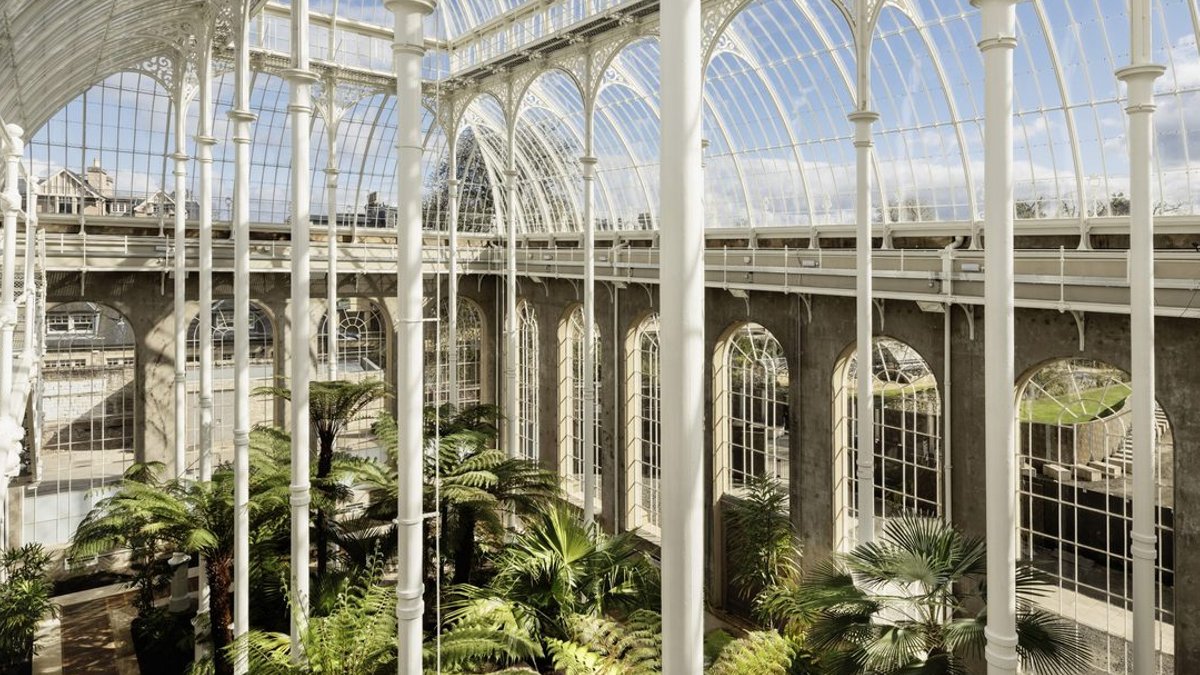
The historic Palm Houses at the Royal Botanic Gardens Edinburgh reopened to the public today after a five-year restoration, marking a significant milestone in the £58 million Edinburgh Biomes project. This initiative stands as one of the garden’s most ambitious endeavors in its 356-year history, aiming to safeguard the institution’s future.
Professor Julia Knights, the 17th Regius Keeper, highlighted the reopening as the culmination of “painstaking restoration work” and years of meticulous planning and fundraising. The project is a critical component of the Edinburgh Biomes programme, designed to protect the garden’s 13,500 plant species, which form the National Botanical Living Collection. Professor Knights, whose role as CEO and director requires approval from the reigning monarch, emphasized the importance of this work in preserving the garden’s heritage.
The restoration involved the careful relocation of approximately 800 plant species, a process that required turning many of the tallest palms and ferns horizontally for safe removal. These plants were then nurtured in research glasshouses for five years. Following this period, 600 specimens, primarily palms and ferns, were selected to return to the Palm Houses, showcasing the garden’s horticultural expertise.
Read Also: Small bedroom redesign boosts sleep and space with £500 tweaks
Not all plants could be preserved. The tallest palm, a Sabal mexicana, originally misidentified as a Sabal bermudana, had to be removed due to its size and proximity to the glass ceiling. However, seeds from this specimen were saved, and one of its offspring has been planted near the original location, ensuring its legacy continues.
The restoration also included the replacement of 5,750 panes of glass, each digitally measured to account for slight variations in size. These were replaced with replicas better equipped to withstand strong winds, a growing concern due to climate change. Additionally, expert craftspeople restored 600 square meters of ironwork and 500 square meters of sandstone. The project unified the 1834 tropical Georgian house with the 1858 temperate Victorian House, creating a seamless temperate glasshouse space.
The reopening followed a month of previews for patrons, members, and supporters, a phase that Professor Knights described as particularly exciting. “Seeing our patrons, members, and supporters come through the doors for the first time in years has been such a special moment,” she said. “So, we can’t wait to reopen to visitors on the 2nd October so everyone can experience the Palm Houses.”


